Intelligent Microgrid Control and Automation

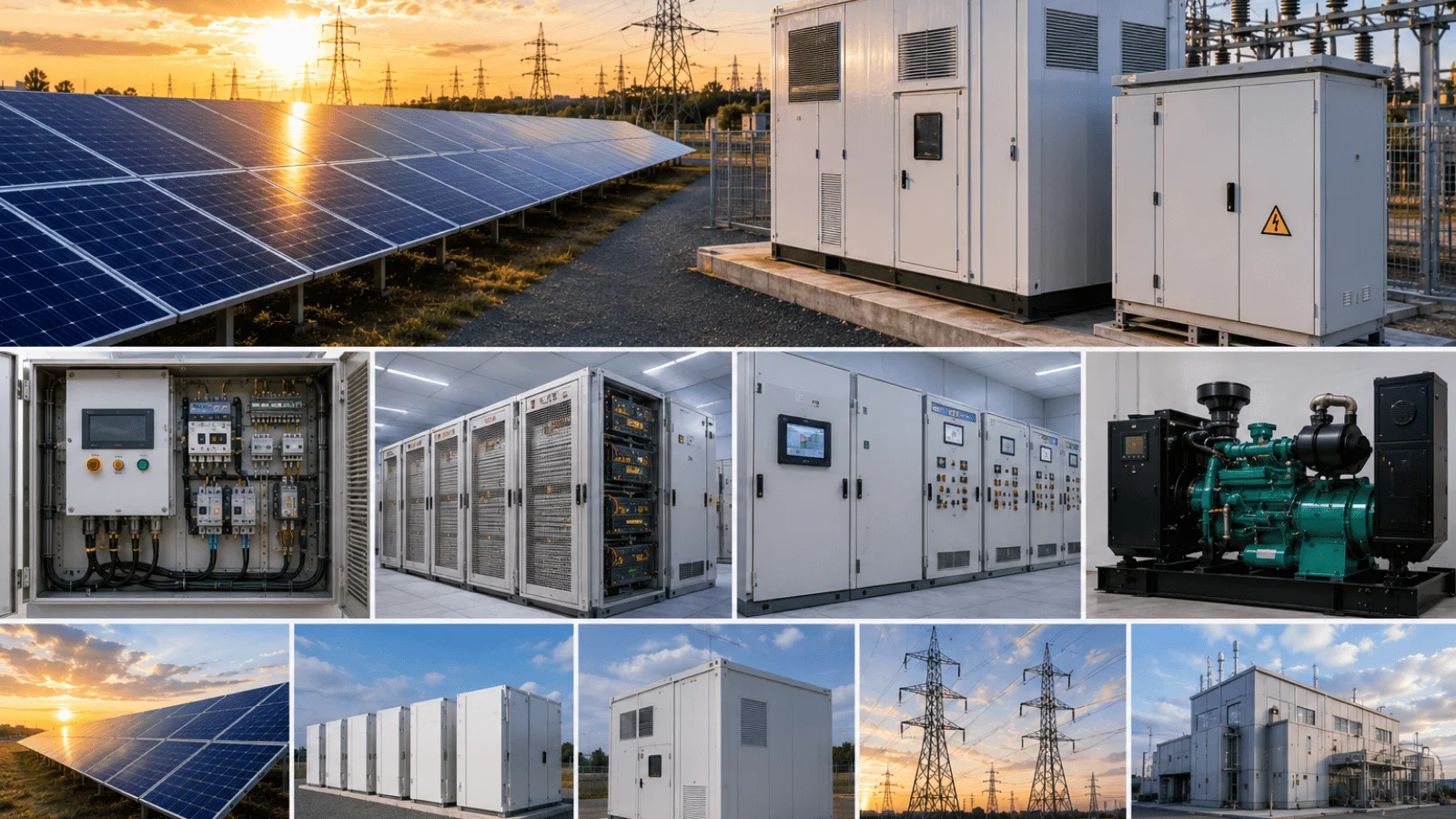
GreenBox Microgrid Control Systems enable reliable, autonomous energy management for off-grid and grid-interactive renewable energy systems.

ABOUT MICROGRID CONTROL

Sophisticated control logic for complex multi-source energy systems

Microgrids require sophisticated control logic to manage multiple generation sources, storage systems and loads — while maintaining stable frequency, voltage and protection coordination. Without intelligent control, solar curtailment is excessive, diesel runs unnecessarily, batteries are damaged by improper cycling, and loads are not prioritised during supply shortfalls.


GreenBox designs and commissions microgrid control systems that integrate solar, battery, diesel generator and grid assets into a unified, intelligent control platform. Our systems are designed for autonomous operation — minimising the need for skilled operator intervention on remote or lightly-staffed sites.


Suitable for remote off-grid sites, island-mode capable systems, resilient grid-connected facilities and any application where generation source diversity requires coordinated control.

MICROGRID SCOPE

Solar PV Integration

Grid-forming and grid-following solar inverter integration with droop and isochronous control modes.

Battery Energy Storage

Battery state-of-charge management, charge/discharge control and cycle life optimisation.

Diesel Generator Control

Automated diesel start/stop, load sharing, fuel optimisation and black-start sequencing.

Grid Synchronisation

Grid-interactive mode with automatic transfer between island and grid-connected operation.

Automatic Source Switching

Seamless, bumpless transfer between generation sources to maintain critical load continuity.

Black-Start Capability

Automated black-start sequences to restore power from a de-energised state without operator intervention.

Load Shedding Automation

Priority-based load shedding to maintain critical loads during generation deficit events.

SCADA & Remote Monitoring

Full SCADA integration with remote monitoring, alarm management and data logging.

CONTROL PHILOSOPHY

Four-layer hierarchical control architecture

PRIMARY CONTROL

Droop & Isochronous

Local governor response — frequency and voltage regulation at the generator level for immediate disturbance response.

SECONDARY CONTROL

Load Sharing

System-level load sharing between generators to optimise efficiency and prevent generator overload or underload conditions.

TERTIARY CONTROL

Economic Dispatch

Optimised generation dispatch based on fuel cost, battery state-of-charge and renewable availability to minimise operating cost.

EMERGENCY CONTROL

Protective Shutdown

Automated emergency shutdown sequences for generator protection, battery protection and system fault events.

DELIVERY PROCESS

Eight-stage microgrid delivery process

01

System Architecture Design

Microgrid topology design — generation source mix, storage sizing, load priority classification, connection topology and control philosophy.

02

Control Strategy Development

Detailed control logic development — primary, secondary and tertiary control layers, source switching sequences, load shedding schedules.

03

Protection Coordination

Protection scheme design for the microgrid — relay settings, fault level calculations, islanding detection and grounding strategy.

04

Hardware Specification

Specification of all control system hardware — ComAp controllers, I/O modules, communication interfaces, HMI and SCADA equipment.

05

Factory Acceptance Testing

Full control system FAT in GreenBox's workshop — testing all control sequences, source switching, fault responses and SCADA functions.

06

Site Installation

On-site control system installation, wiring, integration with generation sources, and field device commissioning.

07

Commissioning

Live commissioning of all microgrid control functions — source switching tests, load tests, protection trip tests and islanding verification.

08

Operator Training

Comprehensive operator training covering system operation, alarm response, manual overrides, routine maintenance and fault diagnosis.

BENEFITS

What a GreenBox microgrid control system delivers

Autonomous Operation

Fully automated microgrid control reduces dependence on skilled operator intervention — critical for remote sites with limited on-site expertise.

Fuel Cost Reduction

Intelligent economic dispatch and battery optimisation consistently deliver 50–80% diesel fuel reduction on hybrid microgrid projects.

High Reliability

Redundant control architecture, automatic fault recovery and battery backup for the control system ensures continuous operation even during equipment faults.

Remote Monitoring

Full SCADA visibility from any location — real-time generation data, alarm management, and remote parameter adjustment for efficient remote site management.

Black-Start Capable

Automated black-start sequences restore power from a fully de-energised state without requiring operator presence on site.

Data-Driven Optimisation

Historical operating data and trend analysis enable ongoing optimisation of control parameters to improve efficiency and reduce operating costs over time.

APPLICATIONS

Where GreenBox microgrid control systems are deployed

CASE STUDY

Remote Agriculture — Western Australia

CHALLENGE

A remote agricultural facility in Western Australia operating entirely off-grid with a 200kW solar array, 400kWh battery system and 150kW diesel standby generator — requiring fully autonomous control with minimal operator intervention between seasonal maintenance visits.

SOLUTION

GreenBox deployed a ComAp-based microgrid controller with automated diesel start/stop based on battery state-of-charge thresholds, solar MPPT coordination, priority-based load shedding, and full remote SCADA monitoring via 4G. The control system was fully pre-commissioned via FAT before delivery to site.

RESULT

78% reduction in diesel fuel consumption compared to previous diesel-only operation. Zero unplanned outages recorded across 12 months of autonomous operation.
DIESEL REDUCTION
0 %
UNPLANNED OUTAGES (12MO)
0

COMMON QUESTIONS

Microgrid Control FAQs

Technical questions about GreenBox microgrid control system design and deployment.
What generation sources can you integrate into a microgrid control system?
GreenBox microgrid control systems can integrate solar PV inverters (grid-forming and grid-following), battery energy storage systems (BESS), diesel generators, gas generators, biogas generators, wind turbines, and grid connections. We design the control architecture to manage any combination of these sources — with automated priority dispatch based on availability, cost and storage state-of-charge.
Yes. GreenBox designs microgrid control systems for both off-grid (island mode) and grid-interactive operation. For fully off-grid applications, we size the control system to manage all generation sources autonomously — including automated black-start sequences, load shedding during generation deficits, and battery protection to prevent over-discharge.
Reliability is a primary design objective for GreenBox microgrid controllers. Our designs include redundant power supplies, watchdog circuits and fail-safe modes — typically defaulting to diesel generator operation in the event of a controller fault. For critical facilities, redundant controller configurations are available. All controller firmware is stored locally, so communication failure does not affect control system operation.
GreenBox uses ComAp controllers — an industry-standard, widely-supported platform used globally for generator control and microgrid management. ComAp is not a proprietary GreenBox platform — any ComAp-qualified technician or integrator can access, service and modify the system. We configure ComAp’s standard software tools (InteliConfig, InteliMonitor) with project-specific control logic.
Yes. All GreenBox microgrid control systems include SCADA with remote monitoring capability via ComAp WebSupervisor or a client-specified SCADA platform. Remote monitoring provides real-time generation data, battery state-of-charge, alarm status, and historical energy data. Remote parameter adjustment is available for authorised operators. 4G and satellite communication options are available for remote sites without fixed internet infrastructure.
Site commissioning duration depends on system complexity and the number of generation sources. A typical hybrid microgrid (solar + battery + diesel) requires 3–7 days of on-site commissioning including source switching tests, protection trip tests, load tests and operator training. We pre-commission the full control system in our workshop via FAT prior to site deployment — minimising on-site commissioning time and remote site travel costs.
Scroll to Top